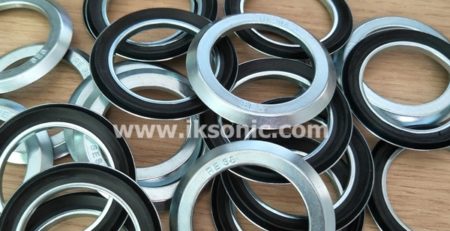
Replacement Seal Procurement: A Checklist for Part Identity, Certificates, and Shipping Weights
Replacement-seal purchasing often begins with a part number and a request for a certificate. A useful procurement file goes further: it identifies what is being supplied, which requirements apply, and how the delivered items connect to the documents. This is especially important when a quotation could refer to a genuine branded seal, an equipment manufacturer’s service part, or a proposed dimensional alternative.
Set those expectations before placing the order. The checklist below helps purchasing and engineering teams review the same evidence.
1. State the required supply route clearly
Record the full manufacturer name and part designation, including prefixes, suffixes, and revision information where applicable. Distinguish among:
- Genuine branded part: the specified seal manufacturer’s product with the required identity and supporting supply records.
- Equipment OEM service part: the equipment manufacturer’s specified service item, identified by its complete service-part reference.
- Proposed alternative: a different product submitted for technical evaluation and explicit approval.
An equipment service number and a seal manufacturer’s number may be different. Ask the supplier to explain any cross-reference. Terms such as “OEM quality,” “replacement for,” or “same size” should not silently change a genuine-part requirement into permission to substitute.
2. Build an identification record
Request legible photographs of the product markings and packaging, plus the exact description that will appear on the quotation and packing list. Preserve any lot, batch, or date codes supplied by the manufacturer. Ask which records can trace the delivered item through the supply chain.
Photographs help identify inconsistencies, but visual similarity alone should not settle an authenticity question. Use the brand owner’s official verification route when doubts remain. Follow the relevant manufacturer’s process for the brand being purchased.
3. Define the technical review for an alternative
If alternatives are allowed, create a separate approval record covering dimensions and tolerances, seal profile, lip arrangement, material or compound designation, and relevant spring or case details. Identify whether each dimension describes the seal itself, shaft, housing bore, or installation groove.
For radial shaft seals, operating temperature, speed, pressure difference, lubricant, and alignment can affect selection. These factors are described in SKF’s Industrial Shaft Seals catalogue. Matching three nominal dimensions does not complete that review. Have the responsible engineer assess the application and record approval before substitution.
Include the actual fluid and relevant operating conditions in the inquiry. If a required compound or design feature is unknown, identify it as an open question rather than inferring it from color or a photograph.
4. Ask what the “ISO certificate” is intended to prove
An ISO 9001 certificate concerns an organization’s quality management system. It does not itself certify that a particular seal meets its product specification, as explained in the ISO/IAF guidance on certification outcomes.
For supplier qualification, review the certificate’s legal entity, covered site and activities, standard, validity, and certification body. Clarify whether the document covers the manufacturer, distributor, or another organization in the supply chain. ISO explains that independent certification bodies issue certificates; ISO itself does not perform certification.
For the shipment, specify the separate evidence needed: an agreed certificate of conformity, inspection results, material documentation, or other applicable records. Define the issuer, covered requirements, and connection to the part number, order, and lot. Confirm document availability before ordering.
5. Separate product weight from shipping weight
Ask for unit net weight and its unit of measure. For logistics, request total product net weight, packed gross weight, package count, and external package dimensions. State whether pallets or crates are included. Clearly label estimated figures and agree when final packed values will be confirmed.
A catalogue unit weight does not establish the final shipment weight. The packing list should make quantities and packaging assumptions understandable so freight planning does not depend on an ambiguous “weight” entry.
6. Close the receiving record
On arrival, compare the parts, markings, quantities, and documents with the approved purchase description. Hold unexplained substitutions, missing traceability, or conflicting records for review. Preserve packaging evidence until acceptance is complete.
When discussing a requirement with IKSONIC, use the oil seal information as a starting point and provide the full procurement checklist. Clearly stating the required identity, permitted alternatives, and documents gives every quotation a consistent basis for review.